About me
I’m Dr Sarah Nicholson, a researcher in ocean and climate science based in South Africa. My work focuses on understanding how the ocean interacts with the atmosphere — particularly how it absorbs carbon dioxide and heat — and how those interactions shape our climate now and into the future.
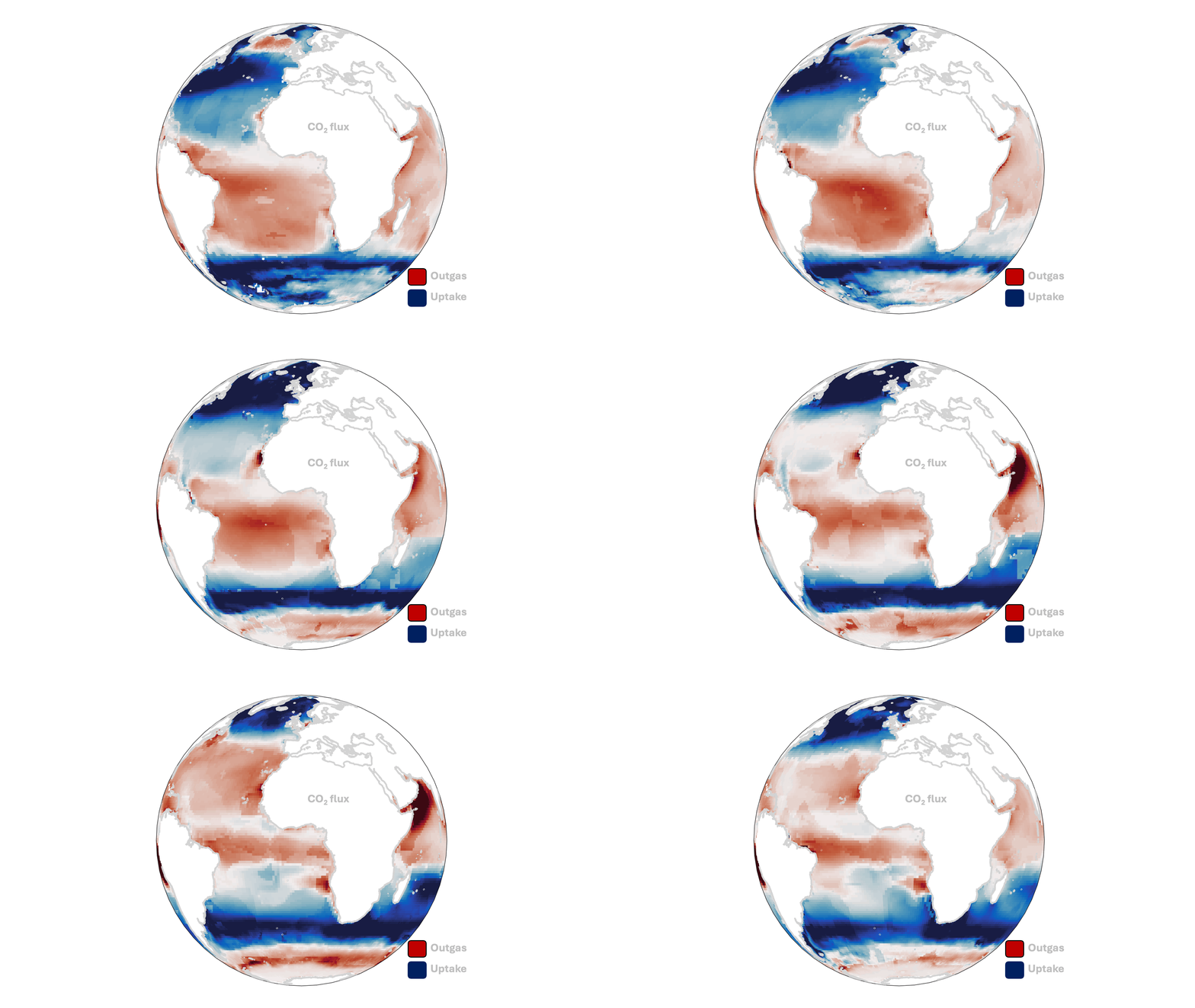
Most of my research is based in the Southern Ocean, a region critical to the global carbon and climate system. I use a combination of autonomous ocean vehicles, like gliders, satelittle observations and numerical models to explore how small- to large-scale ocean processes — including storms and turbulence — influence the exchange of carbon and heat between the ocean and atmosphere.
Why This Matters
Over the past decade, the ocean has absorbed around a quarter of the CO₂ released by human activity and most of the excess heat. This buffering role is vital, but it comes with consequences — the ocean is warming, acidifying, and losing oxygen.
Understanding the mechanisms behind this uptake, and how they may change under different emission scenarios, is key to improving climate projections and informing policy — especially in regions like Southern Africa, where the impacts of climate change are already being felt through coastal flooding, ecosystem change, and resource pressures.
My Approach
At the Southern Ocean Carbon-Climate Observatory (SOCCO), I lead research on ocean-atmosphere interactions using ocean robotic platforms with the aim of understanding the coupling of CO2-heat and air-sea flux exchanges. This involves surface and diving gliders, which are paired to simulatenously observe the air-sea interface and deeper ocean. These gliders are equipped with a variety of sensors that measure turbulence, pCO2, temperature, oxygen and other key climatic tracers and can operate in remote and challenging environments like the Southern Ocean. My research also involves the use of satelitte observations and prognostic ocean models (idealised and regional).
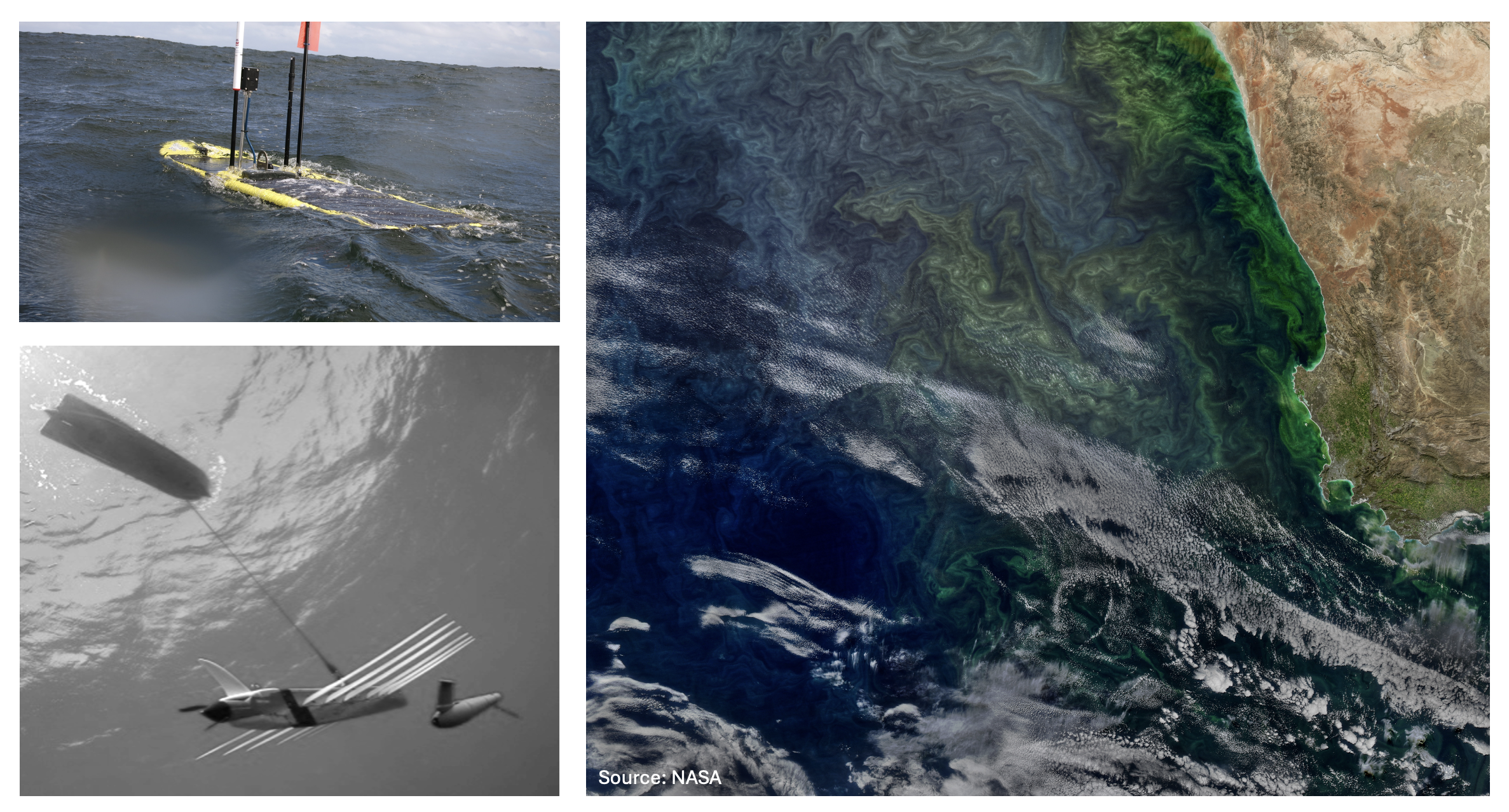
I also manage SA-RobOTIC (South African Robotics and Ocean Technology Innovation Centre), a collaboration between SMME Sea Technologies Services and SOCCO. SA-RobOTICs supports SOCCOs ocean robotic activities and innovation in ocean observing technologies. Our team has been involved in efforts like building custom sensors and expanding glider mission capabilities to improve year-round data collection. Particular focus is on covering key observational blindspots such as winter time in the Southern Ocean.
Collaboration and Mentorship
A large part of my work involves collaborating with other scientists, engineers, and students. I’ve had the opportunity to supervise postgraduate students and participate in international science panels. I enjoy working across disciplines and institutions to build shared understanding of ocean processes and their broader significance.
Current Focus
I’m currently involved in a number of projects, including leading ocean robotics observations along the West African margin, supported by the Schmidt Sciences. These efforts aim to improve observations and understanding in regions that are often under-sampled but highly relevant to climate and marine resource management. I am also interested in marine Carbon Dioxide Removal and am currently involved in efforts to improve South Africas observational baseline of coastal observations of CO2.
If you’re interested in my research, feel free to explore my CV or publications, or get in touch.